



Whether you have just moved to the Jewellery Quarter, or you’re getting to know it a bit better, you don’t need to know all of its rich history straight away. Though, having a bit of context can make the places you see every day feel more interesting, and help you to see the Jewellery Quarter in a different light.
Long before the flats, cafés and studios, the Jewellery Quarter was a working neighbourhood built around making.
From the late 1700s onwards, hundreds of small workshops set up here producing jewellery, metalwork and tools. It wasn’t one big factory, it was lots of independent makers, often working above or behind shopfronts, each specialising in something slightly different.
That’s still reflected in the layout today. Many buildings have:
A lot of what you see now wasn’t designed as offices or apartments, it’s been built on, added to and adapted over time.
By the 19th century, the Jewellery Quarter became one of the biggest jewellery making centres in the world.
Historically, gold, silver and precious stones would come into the area, be worked on by different specialists, and leave as finished pieces.
That network of skilled trades is what gave the area its name, and you will easily spot the signs where that has left a lasting mark:
Even now, it’s still an active place for jewellery-making, not just a historic label, the Jewellery Quarter still makes around 40% of the Jewellery that comes out of the UK!
One of the things that makes the Jewellery Quarter feel different to other parts of Birmingham is how much of it grew through independent, small-scale businesses and skilled work.
Instead of large factories dominating the area, work was spread across:
That’s part of why the area feels quite varied and slightly irregular, it developed piece by piece, rather than all at once, built on the industry of makers and small scale specialists.
Two areas you’ll probably come across early on are St Pauls, and the two historic cemeteries at Key Hill and Warstone Lane.
St Paul’s Square
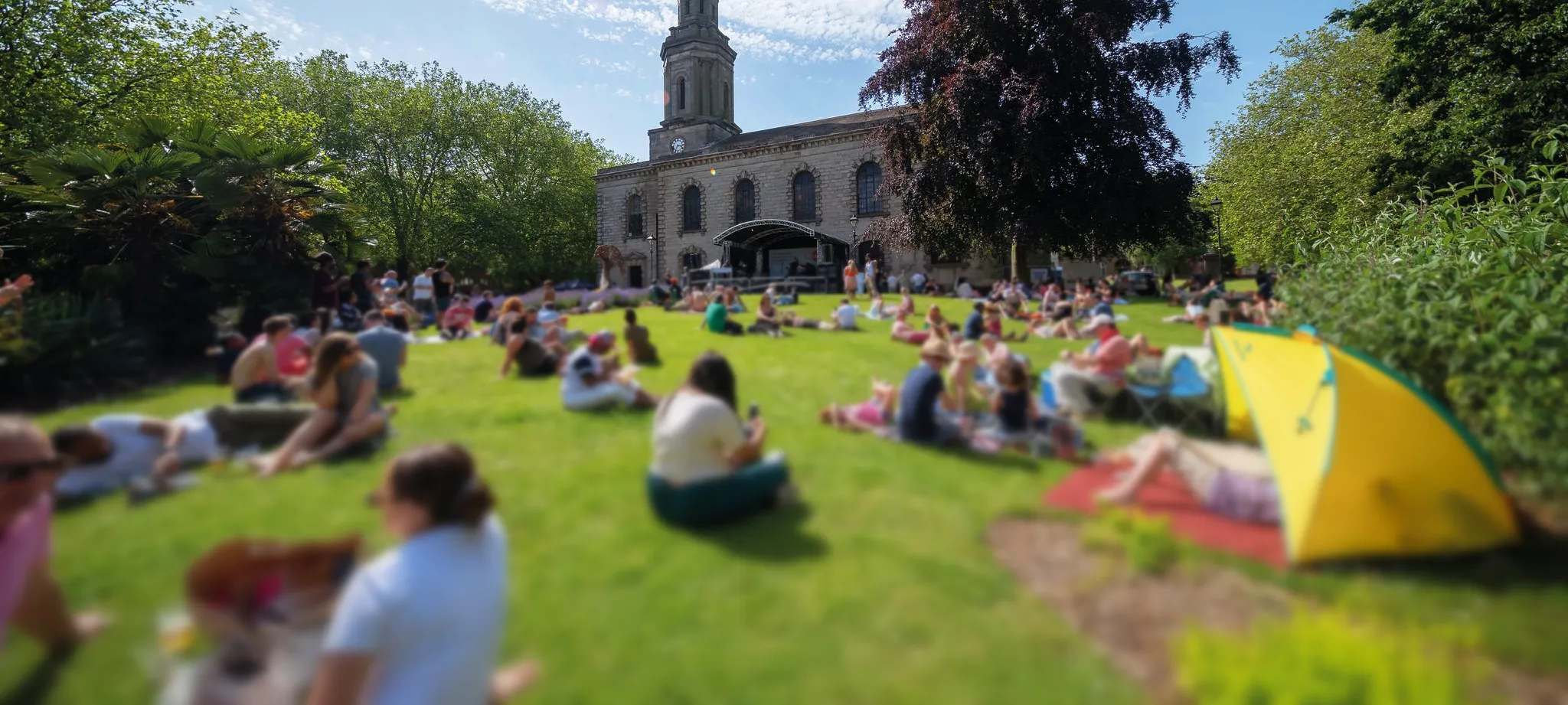
St Paul’s Square is the only surviving Georgian square in Birmingham and has long been a focal point for the area, somewhere people have always gathered, worked nearby, and its history is reflective of the craftsmanship of the area.
Find out more about St. Paul's Church
Warstone Lane Cemetery and Key Hill Cemetery
The cemeteries on the edges of the Quarter tell another side of the story. Many of the people buried there were involved in the jewellery and metal trades, so they’re closely tied to the area’s history. Both cemeteries were set up as commercial cemeteries by the Birmingham General Cemeteries Company. Founded in the 1830’s the company hoped to resolve the issues of shortage in space for graves and create a money making venture.
Find out more about the cemeteries history
Look for cemetery tours with the Friends of Key Hill and Warstone Lane
If you want to explore more of our green spaces we have a guide: LINK
Find information about living in the Jewellery Quarter, local campaigns, issues and news.